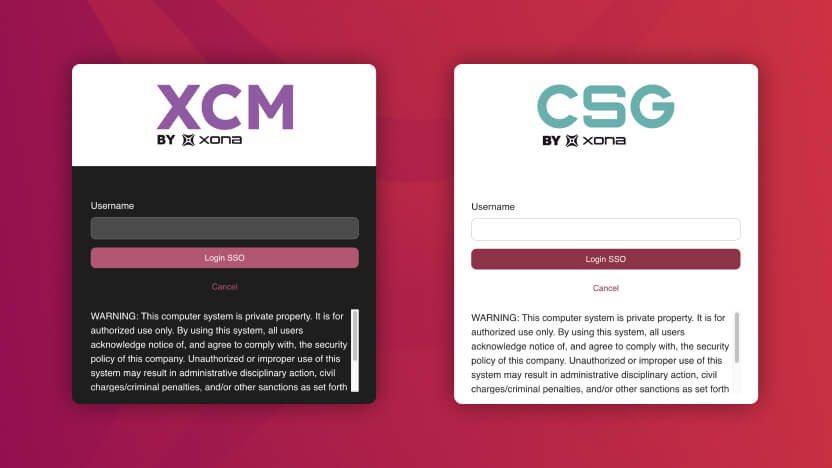


Secure Remote Access for Critical Operations (OT/ICS)

Eliminate endpoint risk without compromising operational control

Xona-Platform-Operational-Control
Vendor laptops and contractor devices are the #1 entry point for OT ransomware and breaches. Legacy VPNs and jump servers extend your network to unmanaged endpoints, creating the access paths attackers exploit to reach critical systems.
Xona replaces VPNs and jump servers with isolated, browser-based sessions. Engineers and vendors access critical systems without their devices ever touching your network.

No direct network access. 30-minute deployment. Compliance-ready by default.

Why Does Legacy Remote Access Fail
in OT Environments?

Xona-Platform-OT-Environments@2x

Remote access is essential for operating and maintaining critical infrastructure. It is also one of the most common paths attackers use to reach OT environments.

Most organizations still rely on VPNs, jump servers, or VDI because they were the only available options. These tools were designed for IT networks with managed endpoints and stable connectivity. OT environments rarely meet 
those assumptions.

Common challenges OT teams face

Unmanaged endpoint risk
Vendors and contractors connect from devices you do not control, yet those devices become trusted simply by authenticating.
Network extension into OT
VPNs and jump servers extend the network boundary, increasing lateral movement risk and expanding audit scope.
Fragile access under 
real conditions
Many tools fail under high latency, intermittent connectivity, or bandwidth constraints common in substations, offshore platforms, and remote sites.
Compliance without 
usable evidence
Policies may exist, but session-level proof of who accessed 
what and what they did is difficult to produce during audits or investigations.

Why this matters now

Since 2021, regulatory agencies have made remote access a top enforcement priority. TSA Security Directives mandate identity-based access controls and session monitoring. Cyber insurance carriers are excluding coverage for organizations using legacy VPN architectures. The tools most organizations rely on were never designed to meet these requirements.

How Xona Secure Remote Access Works
for OT and ICS

Xona Uses Session Brokering, Not Network Tunneling

Traditional remote access tools extend the network to a remote user. VPNs and jump servers place the user’s device inside the OT trust boundary, creating persistent access paths that are difficult to govern and audit.

Xona works differently by:

  • Brokering individual access sessions between users and OT assets.
  • Users never receive network-level access to OT systems, and their device never becomes part of the OT network.
Xona Platform Updated Image

Step-by-step: 

What Happens During A Xona Session

Flexible Identity-based authentication

Users authenticate using the organization’s existing identity provider or use Xona’s native authentication tool. Authentication and authorization are completed before any OT system is accessed.
Xona-Platform-Step-by-step-Identity-Based-Authentication@2x

Least-privilege policy enforcement across Authentication, Authorization, and Session Access

Access is evaluated based on user identity, role, target asset, and time-bound conditions. Only explicitly authorized connections are permitted.
Xona-Platform-Step-by-step-Policy-Enforcement@2x

Session isolation and protocol termination

Xona brokers the session through its gateway. OT protocols are terminated and isolated at the gateway, not exposed to the endpoint.

Xona supports common OT access protocols including RDP, VNC, SSH, and web-based interfaces used to access HMIs, engineering workstations, and control system applications.
Xona-Platform-Step-by-step-Session-Isolation@2x

Continuous monitoring and recording

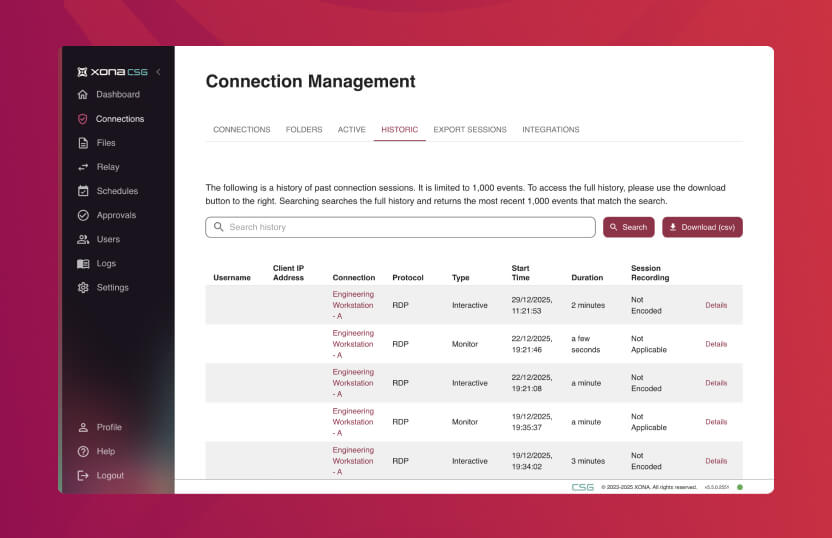
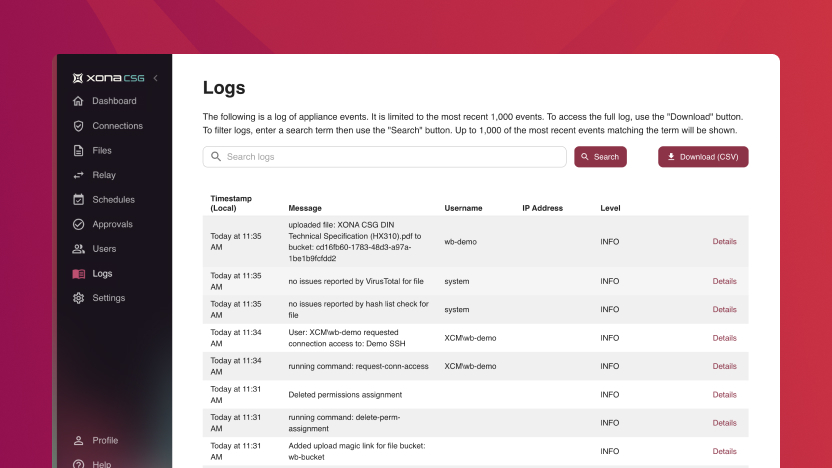
Each session is logged and recorded in real time, creating audit-ready evidence by default.
Xona-Platform-Step-by-step-Continuous-Monitoring-And-Recording@2x

See How Xona Works in Your Environment

How Does Secure Remote Access Work
in Low-Bandwidth and Unreliable OT Networks?

Xona-Platform-OT-Realities

OT environments operate under conditions that traditional IT access tools were never designed for.

Xona is engineered to maintain secure access without encouraging workarounds when conditions degrade.


Designed for OT Realities

  • Session continuity during transient network interruptions
  • Automatic reconnect without reauthentication
  • Predictable performance over low-bandwidth, high-latency links
  • Governance and auditability maintained during disruptions

Secure Remote Access Platform Capabilities for OT and ICS

Secure Access Without Endpoint or Network Exposure

Xona provides secure OT remote access without extending the network to user devices. 
  • No VPN tunnels
  • No inbound firewall exposure
  • No endpoint trust
  • No lateral movement paths

Outcome: Reduced attack surface and contained access risk.

Identity-Driven, Least-Privilege Access

Xona enforces access based on who the user is, what they are allowed to access, and when access is permitted.
  • Integration with enterprise identity providers
  • User-to-asset authorization
  • Time-bound and just-in-time access
  • Automatic access expiration

Outcome: Access matches operational need, not convenience.

Session Recording and Audit Evidence

Every session is recorded and logged automatically.
  • Full session recording with searchable metadata
  • Live monitoring with pause or terminate controls
  • Tamper-proof storage
  • Exportable evidence for audits and investigations

Outcome: Compliance that can be demonstrated, not inferred.

Purpose-Built for OT, Not Adapted from IT

Xona is designed specifically for OT and ICS environments.
  • On-premises and self-hosted deployment
  • No endpoint agents
  • No network redesign
  • Support for legacy systems

Outcome: Security controls that can be deployed and sustained.

Xona-Platform-Secure-Remote-Access-Platform

Secure OT Access Without Complexity

User access experience

This walkthrough shows how an engineer or vendor launches 
an authorized OT session using Xona.
Press Releases

Xona Introduces Secure Access That Survives Network Disruptions

Hanover, Maryland - Feb. 23, 2026 - Xona Systems today announced Platform v5.5, a secure access solution designed to...
Admin
Admin

Author Bio

Day-to-day administration

Press Releases

Xona Introduces Secure Access That Survives Network Disruptions

Hanover, Maryland - Feb. 23, 2026 - Xona Systems today announced Platform v5.5, a secure access solution designed to...
Admin
Admin

Author Bio

Press Releases

Xona Introduces Secure Access That Survives Network Disruptions

Hanover, Maryland - Feb. 23, 2026 - Xona Systems today announced Platform v5.5, a secure access solution designed to...
Admin
Admin

Author Bio

Secure access must be manageable long after deployment.

The Business Case: What Secure Remote Access Protects

Unplanned Downtime

The average cost of unplanned OT downtime is $260,000 per hour. Access-related issues—vendor delays, misconfigurations, credential failures—cause an average of 47 hours of downtime annually. Xona customers have eliminated 92% of access-related outages.

Ransomware and Breach Costs

73% of OT ransomware attacks in 2024 originated from third-party remote access. The average OT ransomware incident costs $4.6M in ransom, recovery, and lost production. Xona eliminates the #1 attack vector.

Regulatory Penalties

NERC CIP violations for inadequate access controls average $1M per violation. TSA Pipeline Security Directive non-compliance can result in operational shutdowns. Xona provides audit-ready evidence by default.

Operational Efficiency

Vendor onboarding that used to take 3 days now takes 15 minutes. Issues that required $5,000 in travel costs and 48-hour delays are now resolved remotely in under 2 hours.

Trusted by Critical Infrastructure and Industrial Leaders

Xona-GE-Vernova-Logo
Xona-RWE-Logo
Xona-Egyptian-LNG-Logo
Xona-AltaGas-Logo
Xona-Baker-Hughes-Logo

Fits Into Your Existing OT and IT Security Ecosystem

Xona integrates with identity systems, asset context, and security operations tools to provide centralized governance across environments.
Endpoints
Critical
Systems
The Xona Platform
Xona unlocks more value from your existing IT and OT security investments

How Xona Compares to Legacy Alternatives

Decision Criteria


Endpoint Exposure
Deployment Time
Network Architecture
OT Suitability
Certification and Compliance
VPNs / Jump Servers
Extend the network into OT, trust unmanaged endpoints
Weeks of network changes and client rollout
Create tunnels and expand audit scope
Fragile under OT conditions

Does not meet key compliance requirements such as NERC CIP, IEC 62443 and TSA directives

IT-Focused ZTNA/PAM
Built for managed IT endpoints
Long deployment cycles in OT
Often cloud-dependent
Not designed for OT constraints

Does not meet key compliance requirements such as NERC CIP, IEC 62443 and TSA directives

Xona Platform Logo Image


Endpoints never touch the network
30 minutes per site
Session-based, not network-based, and flexible cloud and/or on-prem
Enforceable governance that holds up in real incidents
Aligns to key compliance requirements for NERC CIP, IEC, and TSA, and is SOC 2 compliant.

Secure Remote Access for OT and ICS: FAQ

What is secure remote access for OT and ICS?

Secure remote access for OT allows engineers, operators, and third parties to remotely access industrial control systems while enforcing strict identity verification, least-privilege authorization, and continuous monitoring. Unlike traditional IT remote access, OT secure access must preserve operational stability and provide audit-ready evidence without disrupting critical processes.

How does Xona eliminate endpoint risk?

Xona eliminates endpoint risk by brokering access as isolated sessions rather than extending the OT network to user devices. Endpoints never receive network-level access, credentials, or routing into the OT environment, preventing lateral movement and ransomware propagation from unmanaged devices.

Is Xona a VPN?

No. Xona does not create network tunnels or extend the OT network to endpoints. It replaces VPNs and jump servers with session-based access that is authorized, monitored, and terminated without exposing the network.

How is Xona different from a jump server?

Jump servers still place users inside the network and often rely on shared credentials or broad access permissions. Xona enforces asset-level access per session and records all activity, providing stronger containment and governance.

Does Xona require endpoint agents or client software?

No. Xona provides browser-based access and does not require agents or client software on user endpoints, reducing operational friction and deployment risk.

What protocols does Xona support for OT access?

Xona supports common OT access protocols such as RDP, SSH, and web-based interfaces used to access HMIs, engineering workstations, and control system applications. Protocol handling occurs at the gateway to preserve isolation and control.

Can Xona work in low-bandwidth or unreliable networks?

Yes. Xona is designed for high-latency and bandwidth-constrained OT environments and maintains session continuity during transient network disruptions while preserving governance and auditability.

Is Xona cloud-based?

No. Xona supports on-premises and self-hosted deployments and does not require cloud connectivity, making it suitable for regulated or isolated environments.

How does Xona support compliance audits?

Xona automatically records and logs every remote access session, capturing who accessed which system, when access occurred, and what actions were taken. This session-level evidence supports audits, investigations, and regulatory reporting.

How does Xona manage vendor and third-party access?

Xona provides identity-driven, time-bound access for vendors and contractors, ensuring access expires automatically when work is complete. All vendor activity is monitored and recorded, eliminating standing access and shared credentials.

Is Xona built for OT or adapted from IT security tools?

Xona is purpose-built for OT and ICS environments and is not a repurposed IT ZTNA or PAM solution. Its architecture reflects operational constraints, legacy systems, and regulatory requirements common in critical infrastructure.

Secure Access That Holds Up When It Matters

Xona replaces access models that assume ideal conditions with one designed
for operational reality.