






There was a time when “Information Technology” wasn’t a department, an industry, or even a common business term.
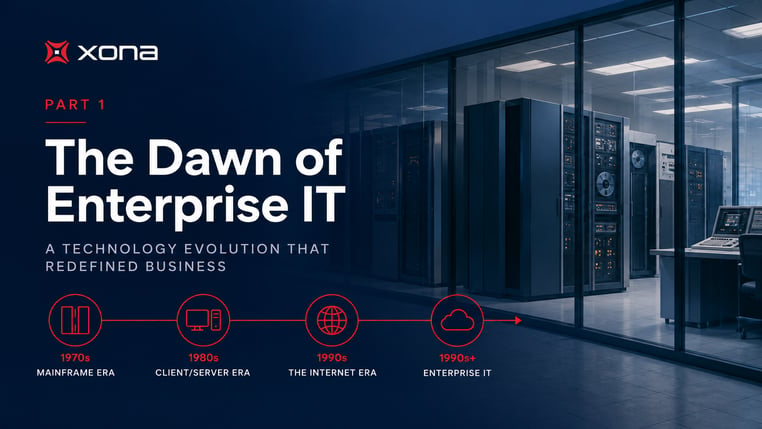
In the 1970s and 1980s, computing and telecommunications were largely separate disciplines. Computers processed information. Telecommunications moved information. Most systems operated independently, often serving specific departments or business functions.
Then those worlds began to converge. Organizations started connecting computers through networks. Servers centralized applications and data. Databases became shared repositories of business information. Email transformed communication. Enterprise software began connecting departments that had previously operated independently.
Computing was no longer a collection of isolated machines. It was becoming an interconnected business system. Eventually, that convergence needed a name: Information Technology.
From IT to Enterprise IT
By the 1990s, another shift was underway. Technology was no longer simply supporting individual departments. It was becoming embedded in nearly every major business process. Finance depended on enterprise applications. Sales relied on customer databases. Supply chains became digitally connected. Communications moved onto corporate networks. The Internet connected businesses to customers, partners, suppliers, and eventually the rest of the world.
IT was becoming the nervous system of the enterprise.
The term Enterprise IT reflected that change.
It wasn’t simply a new label for the technology companies already had. It recognized that computing, networking, applications, communications, and data had become part of one interconnected technology environment. Today, that idea seems obvious. Nobody debates whether email belongs to telecommunications or IT. Nobody treats databases, networks, applications, and cloud infrastructure as completely separate technology domains. But it wasn't always obvious.
The terminology changed because the technology had changed.
Technology Evolutions Change the Language
There’s an important lesson in the emergence of Enterprise IT. New technology categories don't always appear because someone invents something entirely new. Sometimes existing technologies evolve, connect, and become so interdependent that the old categories stop describing how the world actually works. That is what happened with computing and telecommunications. And while Enterprise IT was transforming offices and business operations, another technology revolution was taking place largely outside the corporate server rooms and data centers.
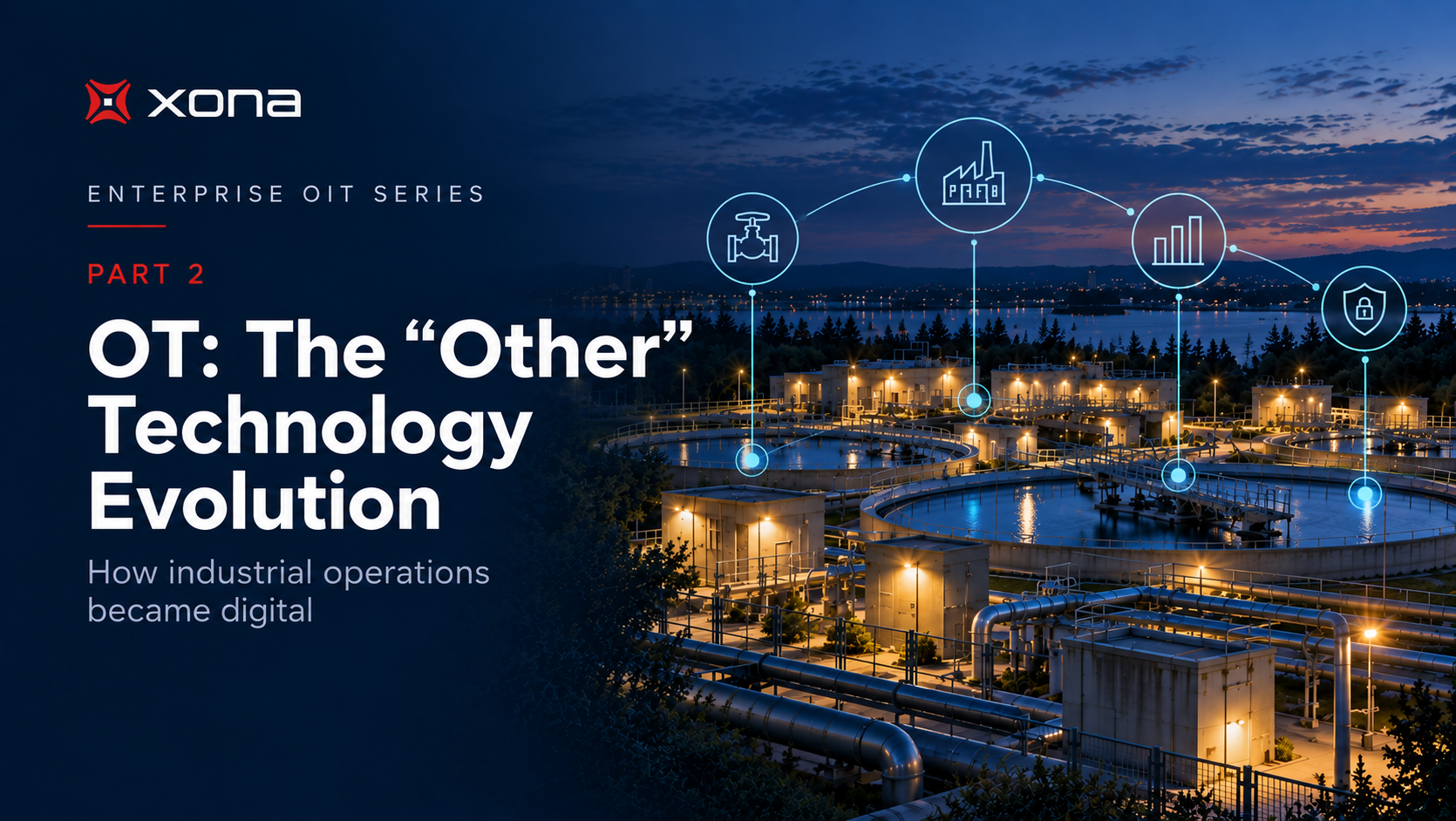
Factories were becoming automated. Power plants were adopting digital control systems. Water utilities were deploying SCADA networks. Industrial operations were becoming increasingly computerized. That evolution would eventually get a name of its own: Operational Technology.
And for decades, keeping IT and OT separate made perfect sense. The question now is whether it still does.
Read Part 2 - OT: The “Other” Technology Evolution: https://www.xonasystems.com/blog/ot-the-other-technology-evolution-part-2-of-the-enterprise-oit-series
Connect with the author: Follow Xona Founder and CEO Bill Moore on LinkedIn: https://www.linkedin.com/in/bmoore06/