






By Bill Moore, Founder & CEO, Xona Systems
TL;DR
- IT and OT Are More Connected: Industrial organizations increasingly rely on both enterprise and operational systems to run the business, manage physical operations, and make decisions.
- AI Adds Operational Intelligence: AI can help teams analyze operational data, identify patterns, and focus attention on activity that matters.
- AI for OT Needs Operational Context: Industrial AI needs context around assets, identities, access, processes, and operating conditions to interpret activity in critical environments.
In the first three parts of this series, I looked at how Enterprise IT developed, how Operational Technology followed its own path, and how artificial intelligence is changing both. Enterprise IT connected the systems that run the business, while OT digitized and automated physical operations. Over time, digital transformation connected more of those systems and made operational data available across the enterprise.
In this final installment of the series, we'll see how AI is now changing what organizations can do with that information. Industrial organizations have spent decades connecting systems and collecting data, and they now have new ways to understand that data, identify relationships across it, and use it to make better decisions about their operations.
How Are IT and OT Becoming More Connected?
IT and OT developed separately because they were designed to solve different problems. Enterprise IT grew around digitizing the information and applications to make business processes more efficient, while OT grew around digitizing physical processes where safety, availability, reliability, and continuity are critical.
A manufacturing line, power plant, water treatment facility, or pipeline still has very different requirements from a corporate application, even as the systems supporting those environments become more connected.
Operational data now provides analytics to enterprise IT, and employees, OEMs and other 3rd party contractors are managing physical processes using purpose-built OT identity access control and governance systems to manage access to industrial environments. Cybersecurity teams are now required to investigate activity involving both enterprise IT and OT systems, while executives use operational information to make quicker decisions about production, maintenance, investment, and risk.
AI can now draw context from both environments. Enterprise IT and OT have become more interconnected. AI can now be used to give organizations a more complete understanding of what is happening across the business. AI is effectively the catalyst for turning Business and Operational Information into Operational Intelligence.
What Is Operational Intelligence?
Operational intelligence is the ability to use data from both information and operational systems to better understand and identify what business processes require attention and prioritize business and operational decisions.
Industrial organizations generate an extraordinary amount of data every day through control systems, sensors, maintenance platforms, security tools, remote access systems, and enterprise applications. The volume can make it difficult for any person or team to determine which information deserves attention.
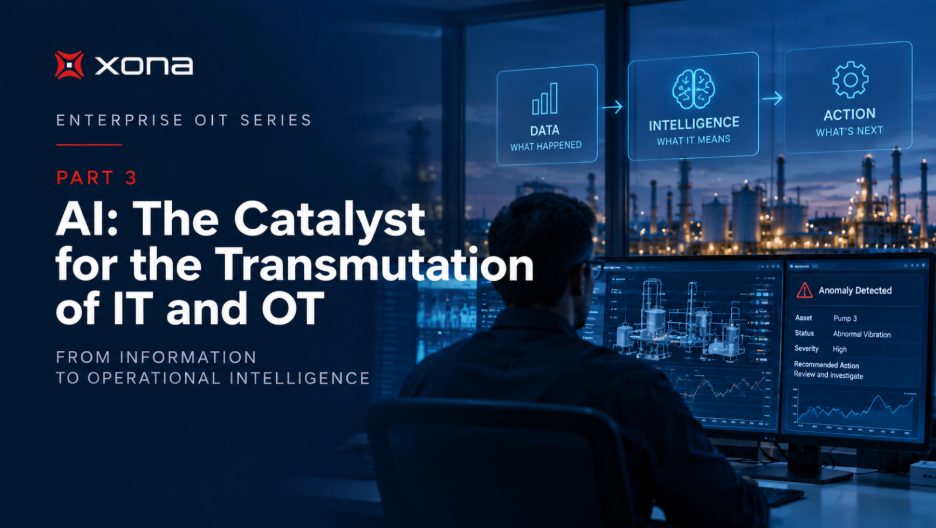
AI helps teams analyze that information by identifying patterns, finding unusual activity, and bringing related context together. An AI-assisted operator could see that an asset is behaving differently from its normal pattern, while a maintenance team could get earlier indications of a developing problem. An AI-assisted security team can analyze remote access logs and user access recordings to have full context around what specifically a user did during a session at a given time and whether the activity deserves further review.
Human judgment remains critical in environments where technology affects physical operations. AI helps operators, engineers, security teams and the overall business focus their time on the information that directly or indirectly affects business efficiency.
How Can Remote Access Data Provide Operational Intelligence?
A modern remote user access platform can generate information about who accessed a specific critical operational system, which assets were involved, when the access occurred, and what happened during the interaction with the system.
Industrial organizations may have employees, contractors, vendors, and other authorized users accessing critical systems across multiple sites, with session logs and recordings providing a detailed record of those interactions.
Over time, an organization can accumulate hundreds or thousands of hours of session history, making comprehensive manual review difficult. AI will help teams analyze that activity, identify patterns, and surface user access sessions or user actions that warrant a closer look.
Teams may want to understand the length of time for a user's access session, whether the activity was consistent with the work being performed, and/or whether something occurred during the session that requires further investigation.
At Xona, we are building an operational intelligence platform which will include AI for session intelligence and behavioral analytics to employ real-time active defense. In addition, AI-assisted operational intelligence technology will help businesses understand context by user and time of access and automate tasks to reduce operational risks while increasing operational efficiency.
Why Does Secure Operational Intelligence Technology (OIT) Access Matter in the AI Era?
AI accelerates cyber reconnaissance, vulnerability research, credential attacks, and exploitation, allowing attackers to perform many activities faster and at greater scale.
Industrial organizations still depend on connectivity for remote maintenance, vendor support, engineering, troubleshooting, and other operational work, so access to critical systems must support that work while remaining controlled. An authorized user should be able to reach the systems required for the job without receiving broad access to the OT environment.
Organizations also need to know who connected, what they were authorized to reach, how long that access existed, and what happened during the session. Those controls already matter in critical infrastructure, and advances in AI increase the importance of limiting unnecessary access to operational systems.
How Will AI Change Operational Access?
Most remote access today involves a person connecting to an operational system, whether that is an employee performing a task, a contractor handling maintenance, or a vendor troubleshooting equipment. Industrial automation already involves other types of connections, including applications for exchanging information, machines communicating with other machines, and automated processes responding to changing conditions.
AI will introduce additional interactions with operational environments. Over time, AI agents may perform work that today requires a person to interact directly with an operational system, which means organizations will need to control what those agents can access and what they are authorized to do.
The same access principles can help guide human and non-human interactions. Organizations will need a way to identify the person, machine, application, or agent requesting access, determine what it is authorized to reach and do, limit that access appropriately, and maintain a record of the activity.
As industrial automation advances, managing operational access will increasingly include both human and non-human interactions with critical systems.
Why Does AI for OT Need Operational Context?
AI used in operational technology (OT) needs to understand the assets, identities, permissions, processes, operating conditions, and industrial processes to interact with OT in context.
The AI models most people know today were designed for broad use across many types of information and tasks. Industrial environments are much more specialized, with their own assets, processes, workflows, operating conditions, and safety requirements.
A power plant, manufacturing facility, water treatment plant, pipeline, or transportation system cannot be understood from data alone. The meaning of an action depends on the system involved, the person or process performing it, the authorization behind it, the operating conditions at the time, and the activity surrounding it.
A user interaction with an asset’s interface may be normal for one asset and unusual for another. A vendor may be expected to work on a particular system during a scheduled maintenance window, while the same activity at another time, from another user, or against another asset could deserve attention.
AI working with operational information needs enough context to understand those relationships. Information about the asset, identity, authorization, work being performed, and sequence of activity can all help determine how an event should be interpreted.
New AI models will be developed specifically around these operational requirements. OT-specific AI could help operators, engineers, and security teams understand activity across their environments, recognize patterns, identify areas that deserve attention, and eventually support more automated workflows across operational systems.
Much of that work is still ahead of us, but the requirements of OT give us a clearer picture of what industrial AI will need to understand.
What Is Enterprise OIT?
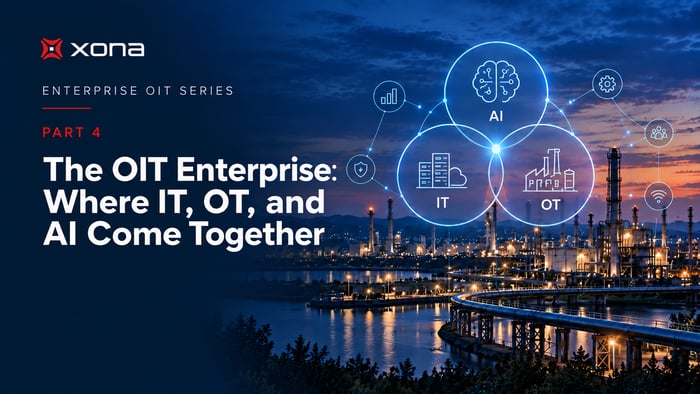
Enterprise OIT is more than just converged IT/OT. It will define how organizations turn information into real-time operational intelligence. Enterprise OIT will extract relevant information from business and operational systems, and AI combined with human expertise will allow organizations to better understand its operations and make informed decisions quickly.
Enterprise technology has gone through several major shifts over the past few decades. Computing and telecommunications came together to create Enterprise IT; industrial systems became increasingly digital and connected, and cloud computing and digital transformation brought business and operational information closer together.
AI is extending that progression by giving organizations new ways to work with information across those environments. For industrial organizations, its value will depend heavily on having reliable information and enough operational context to understand the systems, people, processes, and activity behind the data.
Security and access control will remain part of that picture, alongside operational experience, engineering knowledge, and human judgment. As more AI and automation enter industrial operations, people will continue to interact with critical systems while applications, machines, automated processes, and eventually AI agents take on a larger role.
Enterprise OIT will emerge from how organizations bring those technologies together while preserving the safety, reliability, security, and operational requirements of the environments they support.
Connect with the author: Follow Xona Founder and CEO Bill Moore on LinkedIn: https://www.linkedin.com/in/bmoore06/
The Enterprise OIT Series
Part 1: The Evolution of Enterprise IT
Part 2: OT: The Other Technology Evolution
Part 3: AI: The Catalyst for the Transmutation of IT and OT
Part 4: The OIT Enterprise: Where IT, OT, and AI Come Together